Jacinta Coronado
The Shadow of the WindJacinta Coronado is the Aldaya household’s governess and the person who gives Penelope Aldaya the closest thing to a mother’s sustained care. Her story links the family’s private violence to its long aftermath: after the Aldayas dismiss and silence her, she spends years separated from Penelope, whom she never sees again. When Julián Carax finally visits Jacinta in the hospice and brings news of Penelope, the old woman finds a last measure of peace.
Identity and Early Life
As a child, Jacinta believed that the world ended outside Toledo and that darkness and oceans of fire lay beyond. The conviction began with a fever that nearly killed her when she was four. She later associated that illness with a series of dreams in which the past and future, and the secrets of Toledo’s streets, appeared to her. A recurring figure in those dreams was Zacarias, an angel dressed in black, accompanied by a dark cat. Jacinta remembered his prophecies as having foretold suffering and the loss of what she loved; when the dreams ended, she carried their predictions into adult life.
Her early expectations became bound to a promised child. Jacinta had imagined that she would love a daughter, but Jorge Aldaya’s birth did not fulfil that hope. She left her former life behind and devoted herself to the Aldaya household, living in the family’s shadow and investing her hopes in the girl she believed would come. When Penelope was born in the spring of 1902, Jacinta found the child around whom her life of care would be organized.
Governess to Penelope and Jorge
Jacinta raised both Penelope and Jorge, but her attachment to Penelope was especially profound. She watched over the girl at night, prepared her meals, sewed her clothes, and stayed beside her through illness and the milestones of childhood. Penelope’s mother appeared only intermittently in this daily work of care; Jacinta, by contrast, was there in the ordinary hours. She did not tell Penelope that she loved her, believing that love was shown through deeds rather than declarations.
Her care also extended beyond the household. When Jorge and Julián Carax attended school, Jacinta sometimes collected Jorge because Don Ricardo Aldaya required his children to remain under the watch of someone from the family. Knowing that the boys came from modest families, she brought them afternoon snacks. Julián’s friend Miquel Moliner later remembered that Jacinta continued to insist on feeding them even after he explained that his father was a cook and he did not go hungry. In Miquel’s recollection, her generosity and devotion to the Aldaya children made her the kindest person he had known.
That service came at a personal cost. Jacinta’s life narrowed around the family and Penelope in particular; she had no children of her own and, as far as Miquel knew, no partner. Her love for Penelope existed alongside resentment toward Señora Aldaya, whose position as Penelope’s mother Jacinta envied. The relationship was therefore not simply an ideal of selfless service: the very care that gave Jacinta’s life its purpose also made her intensely vulnerable to separation from the child she had raised.
The Expulsion and Separation
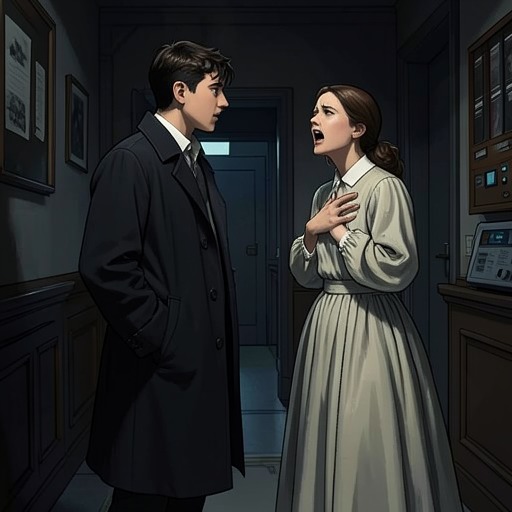
The break came after Señora Aldaya discovered Penelope and Julián together in Jacinta’s bedroom. Penelope told Jacinta what had happened, and Jacinta initially answered Señora Aldaya’s questions by describing Julián as a nice boy and a friend of Jorge’s. She was then ordered to keep Penelope locked in her room. When Don Ricardo returned from Madrid, his anger escalated; he took Penelope away, and Jacinta tried to intervene. Don Ricardo pushed her aside. After the household doctor examined Penelope, Jacinta was ordered to collect her belongings.
Jacinta was not allowed to say goodbye. Don Ricardo threatened to report her to the police if she revealed what had happened, then expelled her after eighteen years of uninterrupted service, leaving her without a home. She repeatedly returned to the Aldaya house, hoping for news or a glimpse of Penelope, but was never allowed through its gates. She waited outside for days at a time and never saw the girl come out. The family later left for Argentina; Jacinta wrote to the address she had been given, but her letters came back unopened.
Miquel’s later account fills in what Jacinta herself could not know. The night of the discovery, Don Ricardo kept Penelope confined in the former governess’s room and used his influence to have Jacinta committed to the Horta asylum after she continued waiting outside the house. Miquel tried to visit her and was refused access; Jacinta spent her first three months in solitary confinement. Afterward, a doctor told him that her submission was assured. These events show how the Aldayas’ authority reached beyond their household: Jacinta’s insistence on seeking Penelope’s fate was treated not as evidence of her bond with the girl, but as a reason to isolate and silence her.
Witness and Keeper of the Secret
Years later, Miquel visits the hospice where Jacinta lives and finds her in an attic refuge, elderly and withdrawn. When he asks whether she remembers Penelope, her expression changes and she recognizes the name as that of her girl. In conversation, she recounts the discovery, her dismissal, her repeated attempts to return, and the long period in which the Aldaya house stood locked and empty. Asked what became of Penelope, she can only say that she never saw her again. The interview ends as Jacinta breaks down; Miquel holds her, and Daniel Sempere and Miquel leave her in the cold, poor room where she is spending her last days.
The account makes Jacinta an important witness, but not an all-knowing one. She can describe what she saw and what happened to her; she cannot explain Penelope’s fate. Elsewhere, Miquel’s testimony supplies the circumstances behind the separation, including Don Ricardo’s order to keep Penelope locked away and the secret that may have been the reason for his fury. The two accounts meet at the same central absence: Jacinta was driven from the house before she could learn what happened to the girl she had raised.
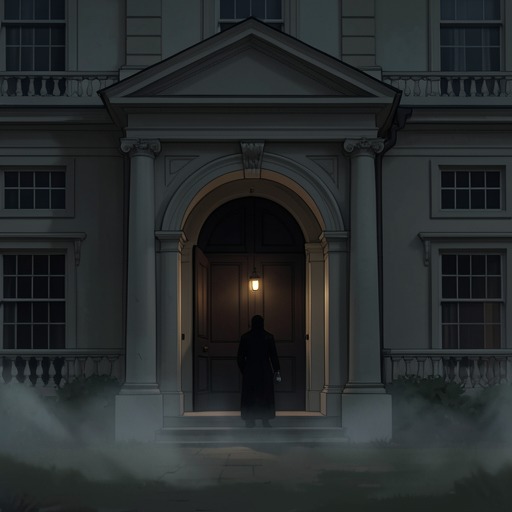
The setting preserves the history of that bond. When Daniel later accompanies Julián into the abandoned Aldaya mansion, they reach the third floor and the servants’ rooms, including Jacinta’s former bedroom. It is the place where Julián last saw Penelope and where she was later confined. The emptied room gives physical form to the separation Jacinta describes: the household that structured her life has vanished, while its former rooms retain the traces of a history she was prevented from witnessing to its end.
Final Visit and Narrative Significance
Jacinta’s final connection to Penelope arrives through Julián, who visits her the night before her death. At the hospice, Sister Emilia tells Daniel and Miquel that Jacinta had not laughed for years, but that she laughed while talking with the visitor about their youth. Julián brought news of her daughter. The next morning Jacinta said she was going home with Penelope, and she died peacefully in her sleep at dawn. The news does not undo the decades of separation, nor does Jacinta return to the life she lost; it gives her, at the end, an understanding of reunion that the story’s history had denied her.
Jacinta’s significance lies in the contrast between care and power. She gives the Aldaya children food, attention, and daily protection, yet the family can dismiss her, bar her from Penelope, and use institutional confinement to suppress her questions. Her story also distinguishes what love can preserve from what it cannot: memory keeps Penelope present to Jacinta, but cannot restore their ordinary life together. The final news from Julián briefly bridges that distance, allowing the woman who spent her life caring for Penelope to imagine that she is going home to her.